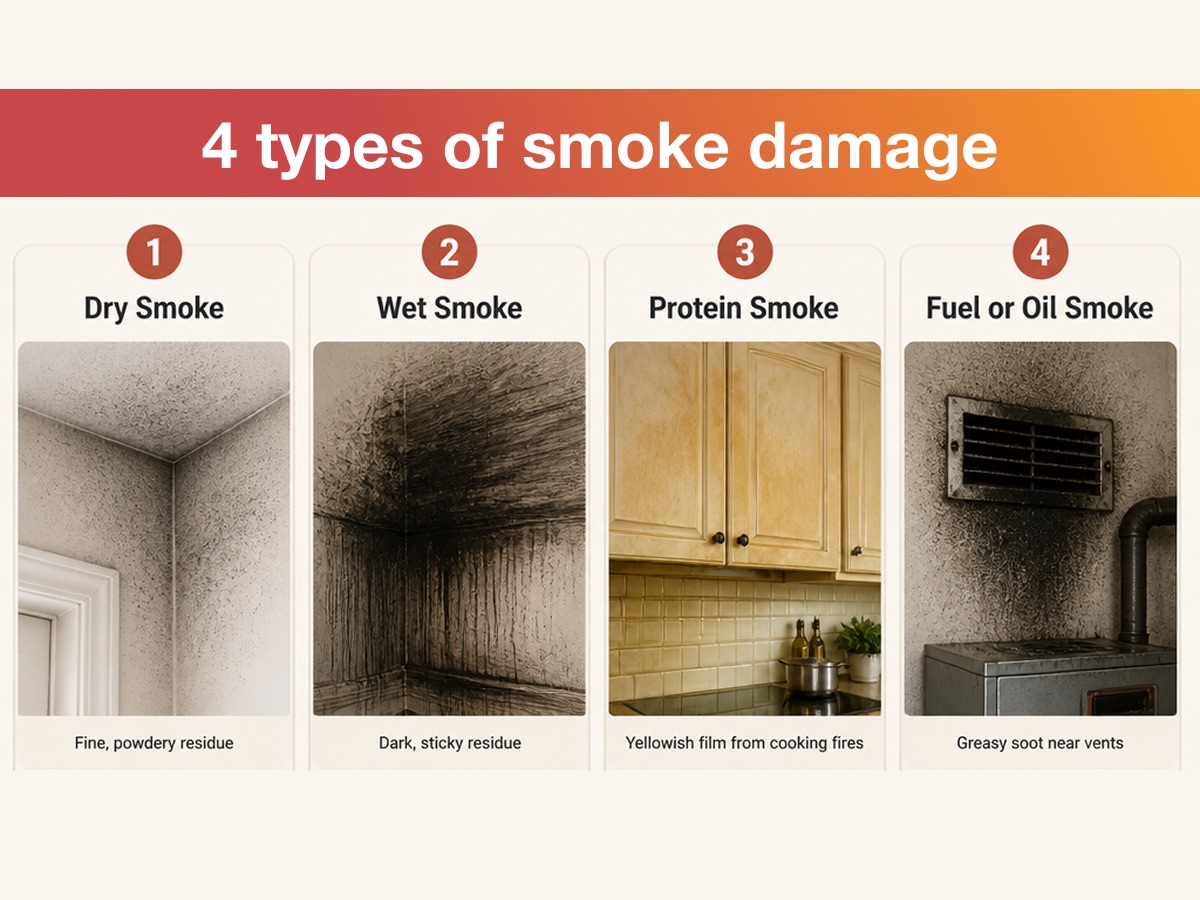
Smoke damage usually falls into four main categories: dry smoke, wet smoke, protein smoke, and fuel or oil smoke. You can often tell them apart by the source of the fire, the color of the residue, the texture of the soot, the smell in the home, and how easily the residue smears.
Smoke spreads farther than the fire
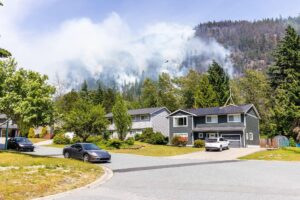
After a fire, smoke moves into nearby rooms, cabinets, vents, fabrics, and porous materials. Even a small kitchen fire, a fireplace issue, a furnace puffback, or a nearby fire leaves residue and odor behind. Identifying the type of smoke damage helps guide fire damage restoration and prevent soot, stains, or odors from worsening.
What does smoke damage mean?
Smoke damage includes the soot, stains, residue, and odor left behind after materials burn. It comes from a major house fire, a small kitchen flare-up, a fireplace backup, a furnace puff back, wildfire smoke, or a nearby fire.
A fire damage restoration plan should look beyond the burned area. Smoke moves into walls, ceilings, cabinets, vents, insulation, carpet, furniture, and other materials throughout the home.
How to identify smoke damage
Start with the source. Paper, wood, plastic, upholstery, food, grease, fuel, and heating equipment all leave different residues.
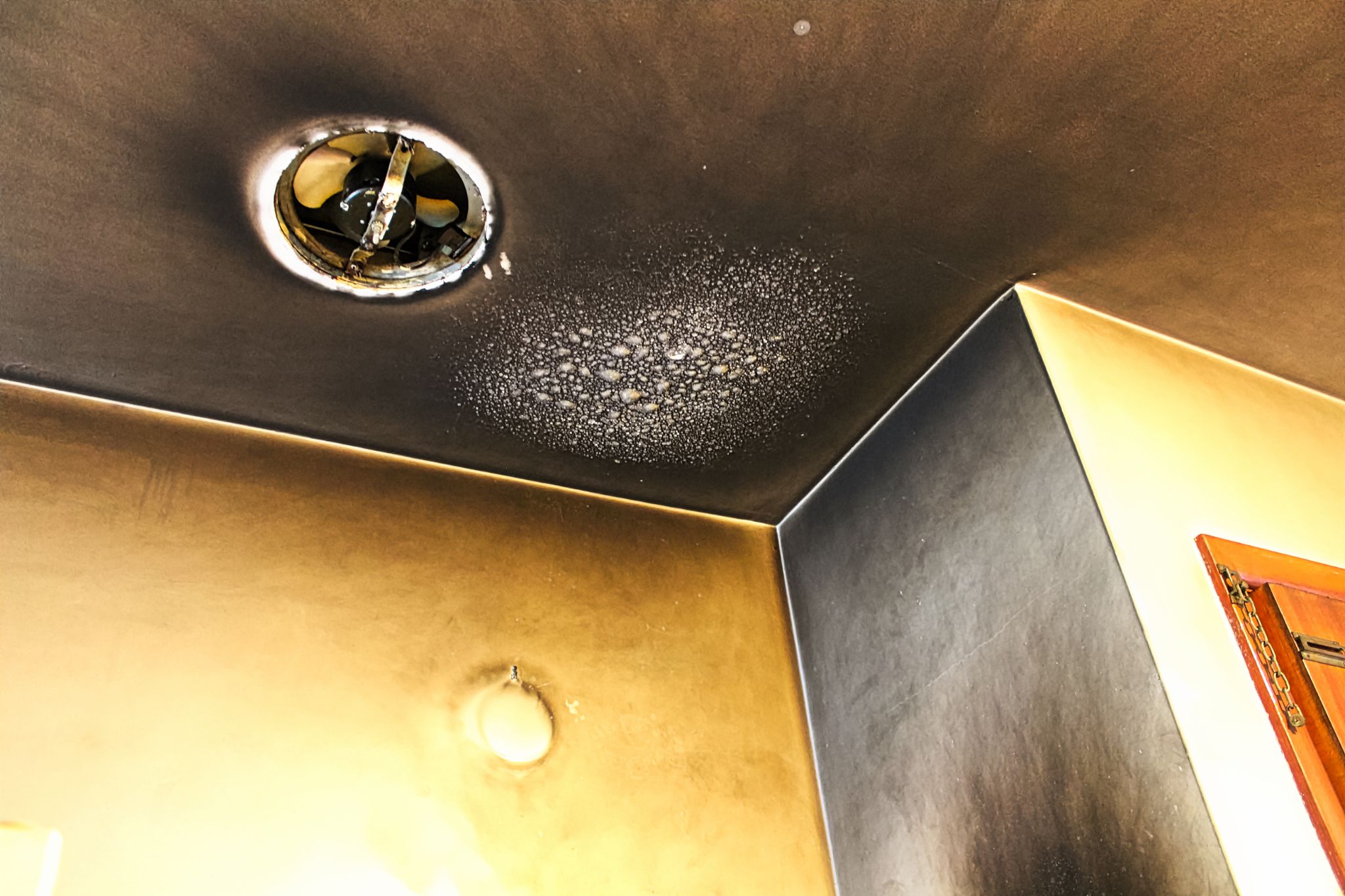
Then, check the color, texture, and smell. Gray powder often points to dry smoke. Sticky, dark soot may indicate wet smoke. A yellow film with a burnt-food odor may point to protein smoke. Greasy black soot near vents or heating equipment may point to fuel or oil smoke.
Look at where the residue traveled, including vents, ceilings, walls, cabinets, closets, furniture, and nearby rooms. Avoid wiping soot before documentation. If residue smears, spreads, or affects several areas, smoke damage restoration is usually the safer option.
Types of smoke damage and how to identify them
Type 1: Dry smoke
Dry smoke usually comes from hot, fast-burning fires involving paper, wood, cardboard, and other dry materials. It often leaves a fine, powdery gray or black residue.
You may see dry soot on walls, ceilings, shelves, contents, and surfaces in the area around the fire. It may look easier to clean because it is lighter and less sticky, but fine soot still settles into cracks, vents, electronics, fabrics, and porous materials.
You often identify dry smoke by:
- Powdery residue
- Light gray or black soot
- A charred odor
- Soot that moves easily when touched
- Damage tied to a fast-burning fire
Dry smoke still causes hidden problems when it spreads. If several rooms are affected, fire damage restoration may include inspection, soot removal, odor treatment, and cleaning of contents.
Type 2: Wet smoke
Wet smoke often comes from slower, lower-heat, smoldering fires. It is common when plastic, rubber, foam, upholstery, synthetic materials, or content-heavy areas burn.
This residue is usually darker, thicker, and stickier than dry soot. It smears when touched, clings to painted surfaces, and leaves a strong odor.
You can often identify wet smoke by:
- Sticky or smeary residue
- Dark soot
- Heavy smoke odor
- Staining that spreads when wiped
- Damage tied to a smoldering fire
Avoid scrubbing wet smoke before you know what you are dealing with. The wrong cleaner may spread residue across the surface. Professional smoke damage restoration helps match the cleaning method to the residue.
Type 3: Protein smoke
Protein smoke often comes from kitchen fires involving food, meat, grease, or cooking oils. It’s harder to see because it may leave little visible soot. The odor is usually the biggest clue.
Instead of heavy black staining, protein smoke may leave a thin yellow or brown film on cabinets, appliances, painted walls, ceilings, and range hoods. Surfaces may feel slick or slightly sticky.
You can often identify protein smoke by:
- Strong burnt-food or grease odor
- Light yellow or brown film
- Slick residue on cabinets or painted surfaces
- Odor inside nearby rooms or cabinets
- Damage tied to a kitchen fire or cooking flare-up
A small kitchen fire still creates a larger cleanup problem. Food-based residue travels into cabinet gaps, fabrics, and ventilation pathways. When basic cleaning doesn’t remove the smell, fire damage restoration may include deeper cleaning and odor treatment.
Type 4: Fuel or oil smoke
Fuel or oil smoke often comes from furnace puff backs, oil-burning heating systems, fuel-burning equipment, or petroleum-based materials. It’s less common than kitchen-related residue, but it can move quickly through vents or heating systems.
This residue is usually dark, greasy, and difficult to remove. It may show up around vents, ceilings, walls, mechanical rooms, or nearby surfaces. If you touch it, it may feel oily and smelly.
You can often identify fuel or oil smoke by:
- Greasy black soot
- Oily residue
- Soot around vents or heating equipment
- Strong fuel-like or oily odor
- Staining that spreads when touched
A furnace or heating issue may require an HVAC technician to fix the source. The soot cleanup may still require smoke damage restoration, especially when residue moves through ducts or settles across several rooms.
Why does a quick cleanup help?
Smoke residue stains surfaces and leaves odor in drywall, carpet, insulation, upholstery, clothing, and other porous materials. Fast cleanup helps limit staining, reduce lingering odor, protect unaffected rooms, support insurance documentation, and identify hidden damage.
A professional inspection also helps shape the cleanup plan. Fire damage restoration may include soot removal, odor treatment, contents cleaning, structural cleaning, drying if water was used, and repair planning.
What not to do after smoke damage
After a fire or smoke event, it’s natural to want to start cleaning right away. Some quick fixes make the damage harder to handle.
Avoid these common mistakes:
- Wiping soot with a wet rag
- Painting over smoke stains before cleaning
- Running the HVAC system after smoke enters the home
- Throwing away damaged items before documentation, unless they create a safety concern
- Using fragrance sprays to cover odor
- Assuming odor-only damage means surfaces are clean
- Cleaning visible surfaces while ignoring vents, cabinets, closets, and fabrics
If the residue is sticky, greasy, widespread, or odor-heavy, stop and get guidance. Smoke damage restoration helps prevent soot from spreading during cleanup.
FAQ
What are the main types of smoke damage?
The four main types are dry smoke, wet smoke, protein smoke, and fuel or oil smoke. They differ by source, texture, odor, and how the residue behaves on surfaces.
How do I tell if soot is dry or wet?
Dry soot is usually fine and powdery. Wet soot is darker, stickier, and more likely to smear. Both spread if cleaned improperly.
Can smoke damage happen without a house fire?
Yes. Smoke comes from cooking flare-ups, fireplaces, furnace puff backs, nearby fires, wildfire smoke, or smoke moving through shared walls or ventilation.
Why does my house smell smoky if I don’t see soot?
Some residues leave more odor than visible staining. Protein smoke from cooking fires is a common example. Odor also settles into cabinets, fabrics, carpet, insulation, and HVAC pathways.
Can I clean smoke residue myself?
A small, light residue may be manageable, but widespread soot, sticky buildup, greasy residue, and strong odor usually need professional help. The wrong cleaner smears soot or traps odor.
Call Total Flood & Fire Restoration for smoke damage restoration
Identifying the residue is the first step toward cleaning it correctly. Dry, wet, protein, and fuel or oil smoke each leave different clues, from powdery soot to greasy black staining. If the odor lingers or the residue spreads beyond a small area, contact Total Flood & Fire Restoration for inspection, cleanup, odor treatment, and fire damage restoration.