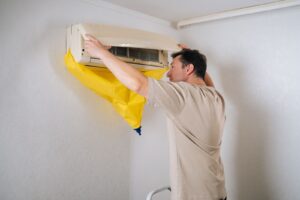
Mold in HVAC systems spreads spores throughout your home, affects indoor air quality, and indicates an underlying moisture problem. If you notice musty odors, recurring condensation, or visible growth near vents or equipment, a quick inspection is necessary. In many cases, a mold remediation specialist helps identify the source and recommends the right next steps.
Why hidden HVAC mold is a bigger problem than it seems
Your heating and cooling system should make your home more comfortable. But mold develops in drain pans, coils, ducts, or nearby insulation when water, dust, and poor airflow combine.
The good news is that early action makes a difference. When you understand how mold in air conditioning systems starts, what signs matter, and when to call a mold remediation specialist, you respond before the problem spreads.
What mold in HVAC means and why it matters
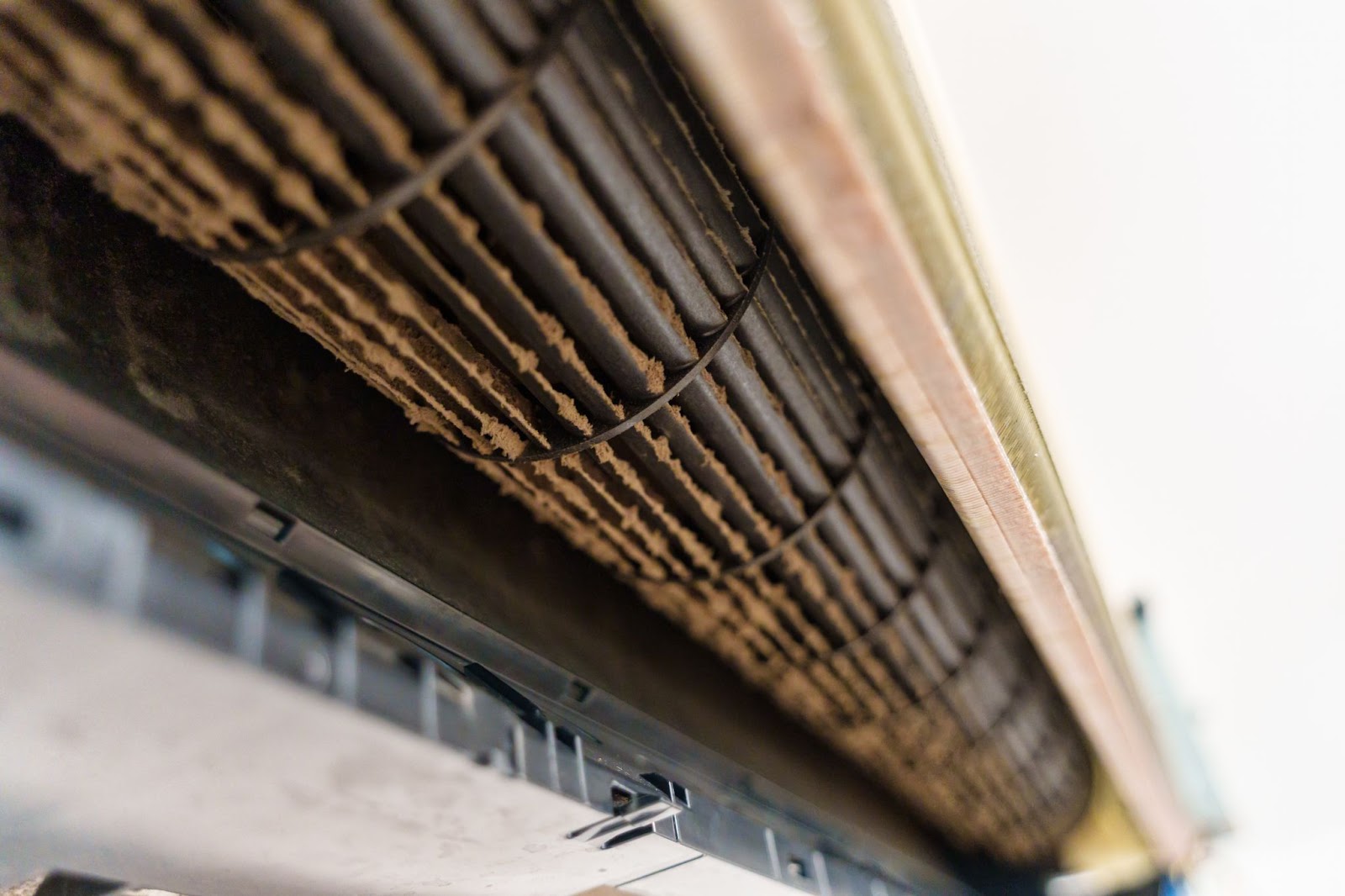
Mold in HVAC grows inside or around coils, drain pans, ducts, filters, insulation, and vents when moisture builds up. Because your system moves air throughout the home, mold in air conditioning equipment spreads odors and particles from room to room.
The bigger issue is usually the moisture source. If you do not fix drainage problems, condensation, or high humidity, the problems will return. That is why some homeowners need both HVAC service and a mold remediation specialist. Cleaning visible spots alone usually isn’t enough.
Step-by-step process for handling suspected HVAC mold
If you suspect mold in HVAC equipment, take a calm, practical approach:
1. Pay attention to the pattern
Note whether the odor appears only when the system starts, during cooling cycles, or in one part of the house. This helps narrow down whether mold in the air conditioning components is involved.
2. Check for visible moisture
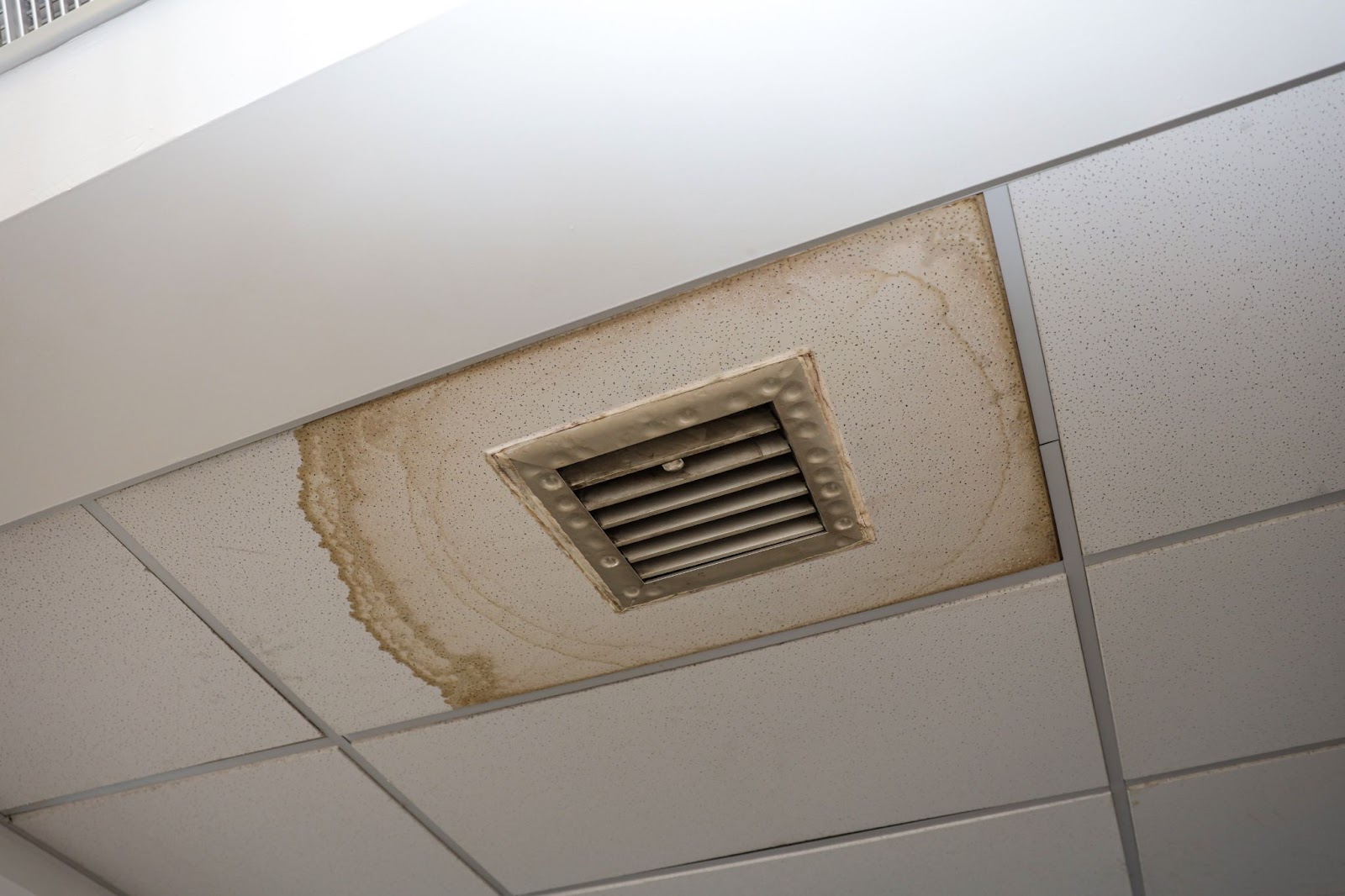
Look for standing water, wet insulation, rust, or condensation near the air handler, drain pan, or surrounding surfaces. EPA guidance consistently ties mold problems to moisture problems.
3. Inspect the filter and nearby vents
A dirty or damp filter doesn’t automatically confirm mold, but it signals poor airflow or elevated moisture around the system.
4. Don’t aggressively disturb suspected growth
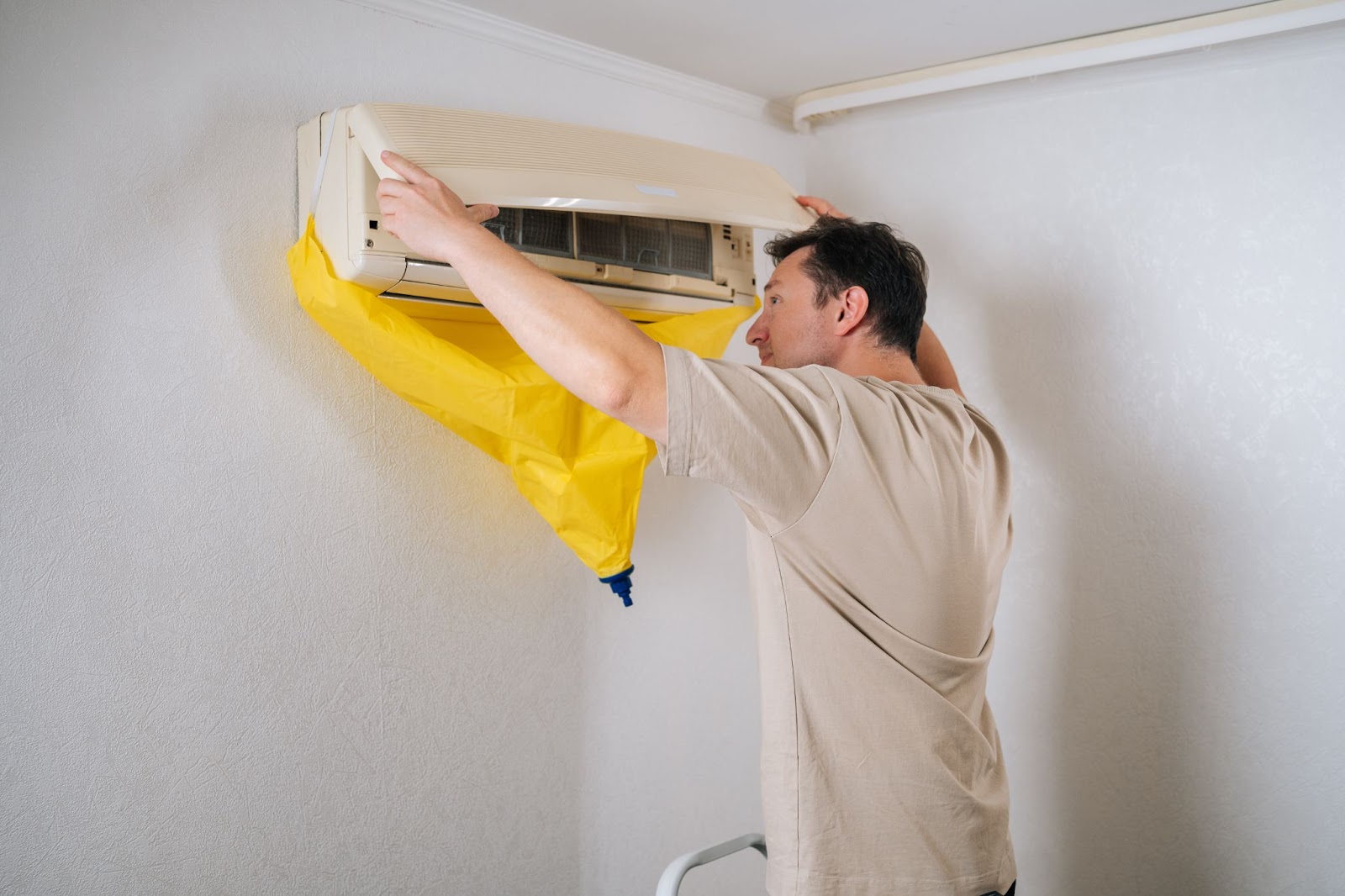
Scrubbing inside equipment without the proper process can spread particles or miss contamination in hard-to-reach areas.
5. Schedule a professional evaluation
Depending on the situation, that may mean an HVAC technician, a mold remediation specialist, or both. If the issue appears widespread, repeated, or tied to water intrusion, broader remediation may be necessary.
6. Correct the moisture source
This is the step homeowners sometimes skip. If you only remove visible buildup without addressing drainage, leaks, or humidity, mold in HVAC areas may return.
7. Create a prevention plan
Regular filter changes, condensate line checks, seasonal tune-ups, and humidity management all help reduce future risk.
Benefits and importance of addressing the issue early
Addressing suspected HVAC mold early helps:
- Protect indoor air quality throughout the home
- Reduce the chance of spores and odors circulating through multiple rooms
- Support better HVAC performance by correcting drainage and airflow issues
- Lower the risk of repeat moisture-related damage
- Prevent a small mold in HVAC problem from becoming a larger restoration project
- Help you decide whether an HVAC contractor, a mold remediation specialist, or both are needed
- Improve peace of mind when mold in air conditioning systems is affecting comfort
EPA and CDC both emphasize the same core principle: fix the moisture problem and clean up the mold promptly.
Common mistakes to avoid
Homeowners often make the problem worse by taking the wrong first step. Avoid these mistakes:
- Ignoring a musty odor because the system is still cooling normally
- Assuming every stain near a vent is harmless dust
- Cleaning visible areas while leaving the moisture source untreated
- Relying only on air fresheners or repeated filter changes
- Waiting too long to investigate mold in air conditioning equipment
- Hiring only one trade when the problem may involve both HVAC repair and remediation
- Skipping a mold remediation specialist when contamination appears widespread or keeps returning
CDC also notes that mold cleanup presents health and injury risks, and only professionals should handle it.
Data, statistics, or research insights
A few key research points stand out:
- Moisture is the main cause of mold growth. EPA says mold control starts with moisture control.
- Quick drying matters. EPA advises drying water-damaged areas within 24 to 48 hours to help prevent mold growth.
- If you see or smell mold, act on it. CDC recommends removing the mold and correcting the moisture source.
- Professional standards exist for larger issues. IICRC outlines industry standards for mold remediation and HVAC system assessment after mold, water, or fire damage.
Tools, products, or recommendations
- Use high-quality HVAC filters that fit the system requirements and replace them on schedule.
- Have the condensate line and drain pan checked during seasonal HVAC service.
- Use a humidity monitor if parts of the home tend to feel damp, especially basements, utility spaces, or low-airflow rooms.
- Schedule a professional HVAC inspection if you notice musty odors, recurring moisture, or airflow issues.
- Ask about a mold remediation specialist if there has been a leak, water intrusion, or repeated mold growth in HVAC equipment.
- Focus on moisture control first because fixing the source is more important than using quick-clean products.
- Stick with routine maintenance to help reduce the risk of mold returning in air conditioning systems.
FAQ
What causes mold in HVAC systems?
Mold in HVAC systems usually starts when moisture collects in drain pans, coils, ducts, or insulation. Dust, poor airflow, and delayed maintenance make the problem worse.
Is mold in air conditioning always visible?
No. Mold in air conditioning systems stays hidden inside equipment or ductwork. Musty odors, condensation, or indoor air concerns may appear before visible growth.
When should I call a mold remediation specialist?
Call a mold remediation specialist if the problem is widespread, keeps coming back, follows water damage, or seems larger than a basic HVAC issue.
Can I clean mold in HVAC components myself?
Basic maintenance is fine, but larger or recurring mold issues inside HVAC equipment are often better handled by trained professionals.
How do I prevent mold in air conditioning systems?
Regular maintenance, proper drainage, filter changes, and humidity control are the best ways to help prevent mold in air conditioning systems.
Utah homeowners and seasonal HVAC concerns
In Utah, it’s not uncommon to shift hard between heating season and cooling season. That change masks small HVAC moisture issues until warmer weather increases condensation and system runtime. Homes with basements, limited ventilation in utility spaces, or older duct systems may be more likely to reveal comfort or odor issues once the cooling season starts.
That doesn’t mean every musty odor is a major mold event. It does mean you should pay attention when smells, humidity, or airflow problems return as spring and summer progress.
Protect your home with Total Flood and Fire Restoration
Mold problems inside your HVAC system should not be ignored. Mold in HVAC equipment affects comfort, air quality, and your confidence in your home’s condition. If you suspect mold in air conditioning components or need guidance from a mold remediation specialist, early action matters.
Contact Total Flood and Fire Restoration to schedule an inspection and get help identifying the source before the problem spreads. Total Flood and Fire Restoration helps you evaluate the situation, identify the source, and take the next practical step toward a cleaner, safer home.